There are moments in art history when an artist does not merely paint a still life but reshapes the emotional possibilities of the genre. Odilon Redon’s Three Vases of Flowers belongs to that rare category—a work that transforms a familiar subject into something atmospheric, poetic, and quietly transcendent. For Redon, flowers were never just flowers; they were states of mind, metaphors, and color-born visions that invited viewers to linger, to breathe differently, and to see the world as soft, fragile, and always on the verge of blooming.
This essay examines Three Vases of Flowers from several angles: Redon’s artistic trajectory, the unique qualities of the painting itself, and the deeper stylistic and philosophical forces that shaped it. Most importantly, we will explore how this work—and high-quality hand-painted reproductions of it—can elevate a wide range of contemporary interior styles.
At the end of the article, as requested, I will also introduce our gallery in Xiamen, China, where we create museum-quality oil painting reproductions, fully customizable in style, size, and subject.
Odilon Redon: The Poet of Color and Dreams
Odilon Redon (1840–1916) occupies a singular place in art history. While many of his contemporaries aligned themselves with defined movements—Impressionism, Symbolism, Post-Impressionism—Redon drifted between them, absorbing what resonated and discarding what did not. His early charcoal drawings (“noirs”) were mystical, eerie, and dream-soaked; later, he bloomed—quite literally—into one of the most poetic colorists of the late 19th and early 20th centuries.
Redon believed deeply in the introspective power of art. His works seem less painted than breathed onto the canvas, as if each pigment molecule carried a whispered memory or emotion. That sensitivity is especially present in his floral pieces. While other artists sought accuracy or botanical completeness, Redon chased something more elusive: the emotional radiance of flowers, their aura, and their spiritual presence.
By the time he created Three Vases of Flowers, Redon had matured into an artist who understood light and color not as visual tools but as instruments of mood. His palette had become luminous, feathered, and weightless. His floral compositions, though simple in structure, are inwardly expansive—like small windows into private worlds.
About Three Vases of Flowers
At first glance, Three Vases of Flowers appears disarmingly simple: three vessels, three clusters of blossoms, set against a background that seems to glow from within. Yet the longer one looks, the more the work reveals its quiet complexity.
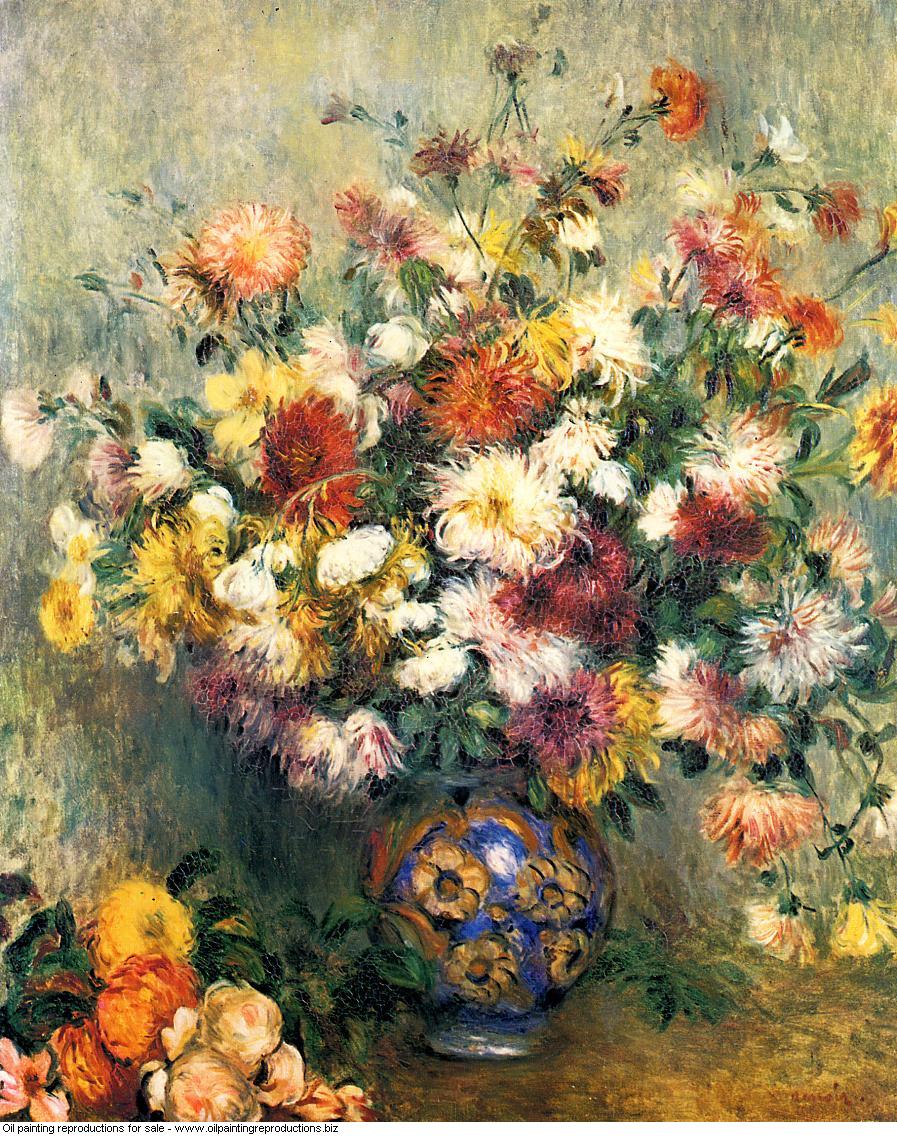
Redon does not define the flowers with crisp botanical accuracy. Instead, he lets the petals soften into the air, allowing their forms to dissolve gently into the surrounding atmosphere. The colors—pinks, oranges, yellows, deep violets—seem to hover rather than sit on the canvas. The background, often shifting from warm to cool tones, becomes an emotional field rather than a physical space.
The three vases stand almost like characters in a story. They differ in shape, color, and presence: one slim and introspective, another round and comforting, the third lively and radiant. The result is a composition that feels conversational, as if the vases are whispering to each other.
Redon’s mastery lies in balance. Nothing is overly sharp, nothing overly vague. Each stroke feels intentional yet unforced, creating a harmony that evokes calm rather than spectacle. In a world often defined by noise, Three Vases of Flowers is a visual pause—a moment of stillness that brings the viewer back to themselves.
Stylistic Analysis: Symbolism Meets Emotional Colorism
To understand this painting fully, it helps to see Redon not as a still-life painter but as a Symbolist. For him, art was a vessel for internal states and imaginative sensations. Three Vases of Flowers does not depict an arrangement on a table; it depicts a mood, an essence, a fleeting harmony of colors and forms.
Color as Emotion, Not Description
Color is the real protagonist in this work. Redon once said, “Color is the keyboard, the eyes are the hammers, the soul is the piano with many strings.”
In Three Vases of Flowers, the colors are intuitive rather than descriptive. Flowers shift from soft blush to glowing orange to shimmering gold. Background hues melt and reform in ways that feel dreamlike.
This emphasis on color over detail anticipates later movements such as Fauvism and Expressionism, yet remains distinctly Redon—gentle, luminous, and deeply introspective.
Form as Suggestion
Unlike classical still-life painters who meticulously described each petal, Redon prefers suggestion. His flowers do not assert themselves; they bloom quietly. This atmospheric softness creates depth without strict perspective, resulting in a work that feels almost meditative.
A Symbolist’s Sensibility
Symbolist artists sought to evoke rather than explain.
In Three Vases of Flowers:
-
The flowers represent states of mind.
-
The three vases suggest harmony in diversity, unity through contrast.
-
The glowing background hints at emotion rather than location.
The painting is less a depiction of objects and more a visualization of a gentle, uplifting emotional state.
Why Three Vases of Flowers Works So Well in Modern Interiors
One of the most fascinating aspects of Redon’s floral works is how effortlessly they integrate into contemporary decor. Despite being over a century old, Three Vases of Flowers feels remarkably modern because of its soft abstraction, luminous palette, and calming aura.
Below are interior styles where the painting—or a high-quality hand-painted reproduction—can enhance the space beautifully.
1. Minimalist Interiors
Minimalism thrives on clarity, simplicity, and calm.
Three Vases of Flowers brings warmth without clutter. The softness of its colors adds emotional depth without disturbing the clean lines of the environment.
Placed above a neutral sofa or a light wood console, it becomes a gentle focal point—one that energizes the room subtly rather than dominating it.
2. Scandinavian Design
Scandinavian interiors rely on natural light, soft textures, and gentle hues. Redon’s palette harmonizes perfectly with this ethos.
The painting’s cozy yet modern mood echoes the Scandinavian balance of simplicity and warmth, making it ideal for living rooms, reading corners, or bedrooms.
3. Contemporary Luxury Spaces
Soft golds, subtle jewel tones, and velvety textures—modern luxury interiors often seek art that adds sophistication without overpowering the space.
Redon’s work does exactly that.
The glow of the background and the soft refinement of the floral forms give the room an elevated, cultured ambiance.
4. Japandi (Japanese–Scandinavian Fusion)
Japandi embraces tranquility, natural materials, and understated beauty. Three Vases of Flowers mirrors these values: quiet elegance, harmony in simplicity, and a hushed but radiant presence.
5. Modern Eclectic Homes
For those who like mixing antique, vintage, and contemporary pieces, Redon’s florals are perfect connectors. The painting feels timeless—neither strictly traditional nor aggressively modern—allowing it to bridge styles gracefully.
6. Boutique Hotels and Hospitality Spaces
Lobbies, lounges, reading rooms, and boutique hotel suites benefit immensely from artwork that calms the mind while adding a sense of luxury.
Redon’s floral compositions have that “restorative” quality, making them ideal for hospitality interiors aiming for a refined, memorable atmosphere.
7. Wellness and Lifestyle Environments
Spas, studios, personal wellness rooms, and meditation spaces often seek visual serenity.
Three Vases of Flowers—with its softened edges, glowing light, and emotional warmth—supports a restorative, grounding environment perfectly.
Why Collectors and Designers Choose Reproductions of Redon
Collectors, interior designers, and art lovers frequently request museum-quality reproductions of Redon’s floral works. The reasons are simple:
-
His style adapts beautifully to almost any interior environment.
-
The emotional resonance of his colors elevates spaces without overwhelming them.
-
Original works are held in museums and unattainable; high-quality hand-painted reproductions allow the beauty of his art to live in everyday environments.
A fine reproduction preserves not just the composition but the softness, texture, and emotional presence that define Redon’s style.
Below is the placeholder for the reproduction image:
.JPG)
A Final Word — and an Invitation
As someone who has worked with art collectors, interior designers, and hospitality spaces for many years, I have seen how a painting like Three Vases of Flowers can transform a room. Its presence is calming. Its colors feel alive. And its poetry is universal. It is the kind of artwork that grows with the space—and with the viewer.
If you are considering adding this work, or other masterpieces, to your home or project, we would be delighted to assist.
Our gallery in Xiamen, China specializes in museum-quality oil painting reproductions, painted entirely by hand.
We can customize any size, any style, and any subject, created with the texture and depth that only true oil paint can offer.
For inquiries, please visit https://www.chinaoilpaintinggallery.com.
Thank you for reading, and I hope this exploration of Odilon Redon’s quiet, glowing masterpiece inspires your next interior project.